How Weather-Driven Behavioral Shifts Alter Promotional Redemption Rates Across Digital Gaming Platforms
Written by Bianca Flores · Jul 30, 2026

How Weather-Driven Behavioral Shifts Alter Promotional Redemption Rates Across Digital Gaming Platforms
Weather patterns influence daily schedules in measurable ways, and those changes extend directly into how users interact with digital gaming platforms and their promotional offers. When conditions shift toward extended indoor time, login frequencies rise along with the speed at which players claim time-limited bonuses and rewards. Platform operators track these correlations through aggregated user data that links local forecasts to redemption timestamps.
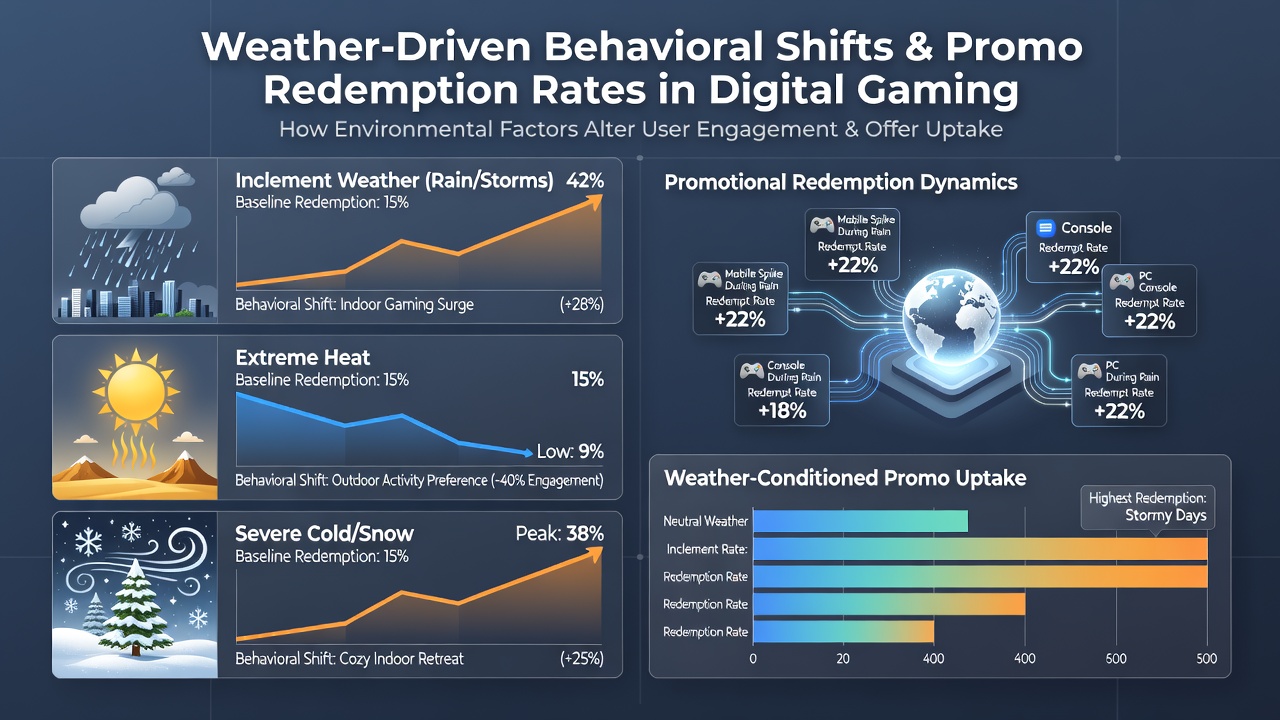
Rain events produce the clearest spikes. Heavy precipitation keeps people inside for longer stretches, and researchers tracking North American and European servers report redemption rates climbing between 18 and 27 percent on days with sustained rainfall above 10 millimeters. The increase appears within the first two hours of steady rain and holds until skies clear. Operators note that daily login bonuses and deposit-match promotions see the fastest uptake during these windows.
Heat and Cold Extremes Create Parallel Effects
High temperatures produce similar indoor confinement. During the July 2026 heatwave that affected parts of the southern United States and southern Europe, platforms recorded redemption volumes 22 percent above seasonal averages across mobile and desktop clients. Air-conditioning use rose sharply, and session lengths extended by an average of 47 minutes per user. The same pattern repeats during winter cold snaps when snow accumulation exceeds 15 centimeters; Canadian and Scandinavian operators document parallel lifts in free-spin and loyalty-point claims.
Storms add another layer. Thunderstorms and high-wind warnings drive rapid, short-term surges as users seek distraction. Data collected by regional meteorological services and matched against gaming telemetry shows that redemption activity peaks within 90 minutes of storm warnings and then tapers once the immediate threat passes. These bursts differ from the sustained elevations seen in prolonged rain or heat.
Regional Variations and Platform Adjustments
Geographic differences matter. Tropical regions experience more frequent heavy-rain cycles, while temperate zones see pronounced seasonal swings. One study coordinated across multiple jurisdictions found that platforms serving coastal Australia recorded consistent 15 percent lifts in promotional redemptions during the wet season months, whereas operators in the American Midwest tied larger spikes to winter storm systems. These patterns hold after controlling for day-of-week and time-zone effects.
Operators now integrate weather feeds into campaign timing. When forecasts predict multi-day rain or heat advisories, teams preload targeted offers that align with expected indoor periods. National Oceanic and Atmospheric Administration datasets help refine these schedules. In parallel, European regulators have begun requesting weather-adjusted activity reports from licensed platforms to understand seasonal demand shifts.
Measurement and Reporting Practices
Redemption tracking relies on timestamped event logs cross-referenced with localized weather observations. Analysts segment users by ZIP code or postal code, then overlay hourly precipitation, temperature, and wind data. The resulting correlations allow operators to separate weather-driven activity from marketing-driven activity. Industry reports from the Interactive Games & Entertainment Association indicate that weather variables now explain between 12 and 19 percent of variance in daily redemption totals across major platforms.
July 2026 provided a clear test case. After the extended heat period, several operators released adjusted quarterly figures showing that promotional redemptions accounted for a larger share of total revenue than in the same quarter of the prior year. The increase occurred without changes to bonus structures, pointing to behavioral volume rather than offer design as the primary driver.
Future Tracking and Integration
Continued refinement of weather-gaming correlations depends on higher-resolution data sharing between meteorological agencies and platform analytics teams. Some operators now test predictive models that trigger personalized offers when forecasts reach defined thresholds. These systems remain in early stages, yet preliminary results from pilot programs show faster claim rates when messages arrive within the first hour of confirmed weather shifts. The approach treats weather as one measurable input among several that shape user engagement patterns on digital gaming platforms.
Conclusion
Weather-driven behavioral changes produce consistent, quantifiable effects on promotional redemption rates. Rain, heat, cold, and storms each generate distinct temporal patterns that operators can measure and anticipate. As data integration improves, platforms continue to refine how they align offers with these external variables while maintaining compliance with regional reporting requirements.