How Regulatory Updates Alter Game Categorization Standards Within Worldwide Digital Wagering Indexes
Written by Devon Klein · Aug 8, 2026

How Regulatory Updates Alter Game Categorization Standards Within Worldwide Digital Wagering Indexes
Regulatory bodies across multiple jurisdictions have implemented updates that directly reshape how games receive classification within global digital wagering indexes, and these shifts create new standards for categorization that operators and index compilers must follow. Data from government agencies shows that changes in definitions for skill-based versus chance-based games now require fresh evaluation protocols in August 2026, which affects how platforms list titles in worldwide directories.
Key Regulatory Changes Driving Reclassification
Authorities in several regions have revised criteria that separate lottery-style products from interactive formats, and this forces index maintainers to adjust their tagging systems accordingly. Researchers at institutions tracking gaming trends note that updates from bodies like the Nevada Gaming Control Board have introduced stricter metrics for determining whether a title qualifies as a slot or a table game variant. These adjustments propagate through international indexes because many platforms align their internal categories with standards set by major licensing jurisdictions.
European regulators have also modified rules around live dealer offerings and hybrid formats that blend video elements with real-time interaction, which means indexes must now incorporate new subcategories to maintain accuracy. Observers tracking these developments report that such revisions often stem from consumer protection priorities and tax classification needs that vary by country yet influence global listing practices.
Regional Variations and Their Global Ripple Effects
North American updates in states like New Jersey and Pennsylvania have emphasized clearer distinctions between social casino models and real-money wagering environments, while Australian oversight bodies have focused on loot box mechanics and their placement within chance-based indexes. These regional differences create layered requirements for worldwide digital wagering indexes, as compilers compile data from multiple sources to produce unified rankings and categorization frameworks.
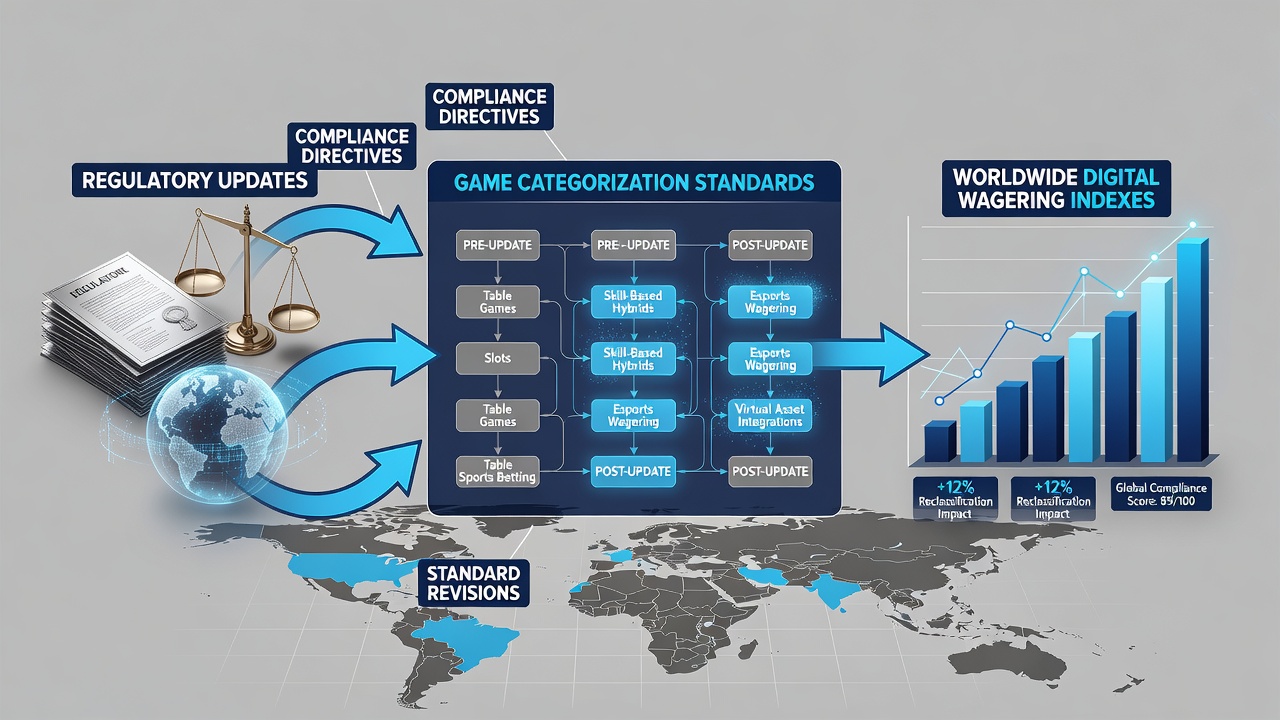
Asia-Pacific jurisdictions have introduced fresh guidelines for esports betting integration, and this has prompted index creators to develop dedicated sections that separate competitive gaming from traditional casino offerings. Figures released by research groups indicate that these changes became particularly noticeable in mid-2026 when several markets synchronized their reporting cycles around the same period.
Impact on Index Maintenance and Platform Compliance
Index operators now conduct more frequent audits to verify that listed games match current regulatory definitions, and this process often involves cross-referencing with official gazettes from multiple countries. Those who maintain large-scale directories report that updates in one region can trigger chain reactions across listings because many platforms operate under multiple licenses simultaneously.
Technology providers have responded by building automated compliance tools that flag potential reclassification needs when new rules emerge, which helps indexes stay current without manual intervention at every step. Evidence from industry reports shows that platforms incorporating these tools experience fewer discrepancies in how their offerings appear within global search and ranking systems.
Future Outlook for Categorization Frameworks
Additional regulatory developments scheduled for later in 2026 are expected to address emerging formats such as blockchain-integrated games and AI-assisted play mechanics, which will likely require further refinements to existing categorization schemas. Analysts following these trends point to ongoing collaboration between regulatory agencies and index providers as a key factor that will determine how smoothly transitions occur.
Conclusion
Regulatory updates continue to reshape game categorization standards in worldwide digital wagering indexes through coordinated changes across jurisdictions, and the effects appear in revised listings, new subcategories, and updated compliance protocols that affect operators globally. Data from diverse sources including government agencies and research institutions confirms that these alterations maintain momentum into August 2026 and beyond, creating a dynamic environment where classification systems must evolve in response to shifting legal landscapes.