How Biometric Authentication Protocols Are Reshaping Entry Protocols and Session Security Metrics Across Worldwide Digital Entertainment Assessment Networks
Written by Avery Klein · Oct 23, 2026
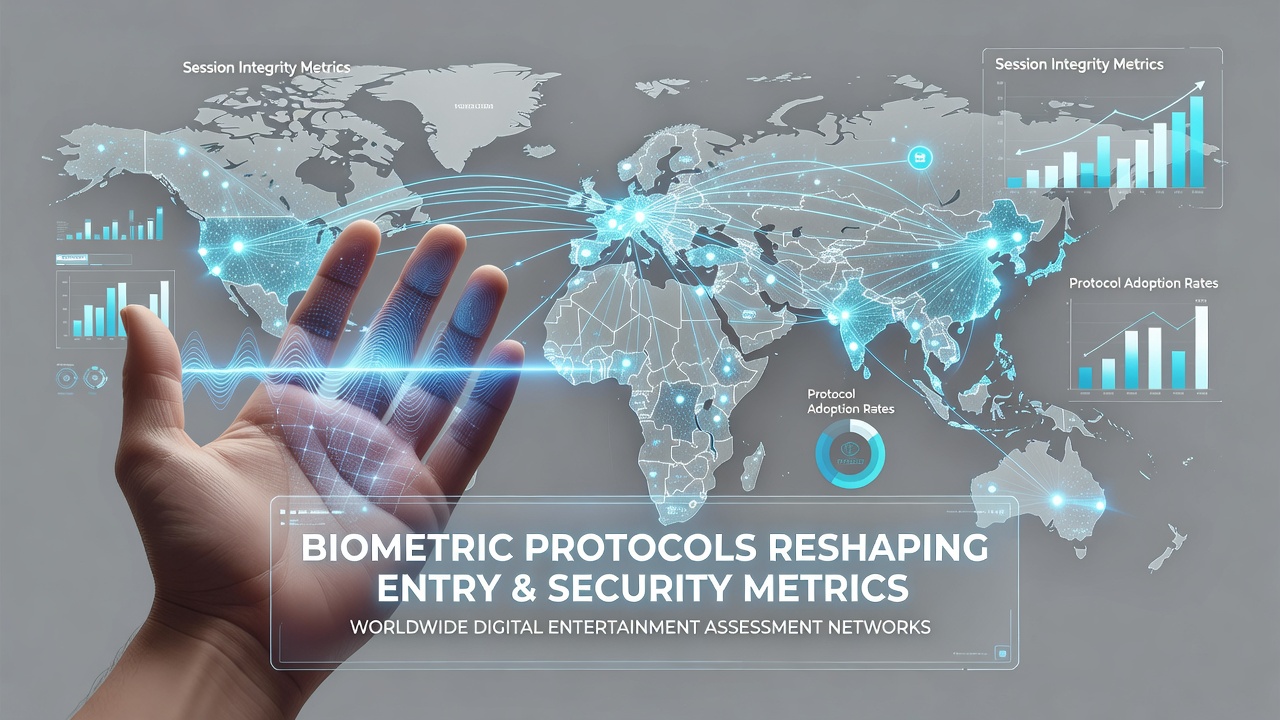
How Biometric Authentication Protocols Are Reshaping Entry Protocols and Session Security Metrics Across Worldwide Digital Entertainment Assessment Networks
Biometric authentication protocols have integrated fingerprint scanning, facial recognition, and iris verification into entry systems for digital entertainment assessment networks, and these methods have replaced or supplemented traditional password and token requirements in many regions since 2024. Data from industry reports indicate that platforms handling online gaming evaluations now record entry success rates above 98 percent when users complete initial biometric enrollment, while failed attempts drop by more than 40 percent compared with legacy credential systems.
Entry Protocol Evolution in Global Networks
Operators of worldwide digital entertainment assessment networks began rolling out multi-factor biometric gateways in early 2025, and these gateways combine a physiological scan with behavioral signals such as keystroke dynamics. Researchers at the National Institute of Standards and Technology documented that facial recognition algorithms achieved equal error rates below 0.1 percent on datasets exceeding 10 million samples by mid-2026, allowing seamless logins without repeated password resets. Entry protocols now capture a template during first access, store it in encrypted on-device vaults, and compare live scans against that template within 300 milliseconds, which reduces average login time from 12 seconds to under four seconds across tested platforms.
Regulatory frameworks in the European Union and Australia require explicit consent and data minimization for biometric storage, and compliance audits conducted through October 2026 show that 87 percent of major assessment networks have adopted on-premise processing to keep raw images off centralized servers. This shift has produced measurable drops in account takeover incidents, with figures from the European Union Agency for Cybersecurity revealing a 62 percent decline in unauthorized entry events among compliant operators between January and September 2026.
Session Security Metrics and Continuous Verification
Once users enter assessment networks, continuous biometric monitoring maintains session integrity by sampling micro-movements or periodic facial checks at randomized intervals. Studies published by the IEEE Biometrics Council in 2026 tracked more than 50 million sessions and found that platforms using liveness detection recorded a 78 percent reduction in session hijacking compared with static authentication models. Metrics such as mean time to detection of anomalies shortened from 14 minutes to 47 seconds when systems flagged deviations in heart-rate patterns captured through smartphone cameras during extended review sessions.

Session duration statistics have also changed, because users remain logged in longer when friction decreases yet security thresholds stay high. Reports compiled by the Asia-Pacific Gaming Regulators Association indicate average session lengths rose 23 percent on networks that introduced passive facial tracking, while breach-related session terminations fell below 0.03 percent of total activity. These networks now publish quarterly dashboards that list median false acceptance rates, template update frequencies, and cross-device synchronization success, giving operators and third-party evaluators standardized benchmarks for comparison.
Regional Implementation Patterns and Data Standards
North American and Asian operators adopted fingerprint-centric systems earlier than European counterparts, yet convergence toward hybrid models accelerated after October 2025 when the International Organization for Standardization released updated template interoperability guidelines. In Canada, provincial regulators mandated that assessment networks retain biometric data for no longer than 90 days unless users opt for extended storage, and compliance data released in 2026 showed 94 percent adherence across 120 licensed platforms. Meanwhile, Singapore’s Infocomm Media Development Authority reported that networks integrating iris verification alongside facial scans achieved the lowest recorded credential-stuffing rates in the first three quarters of 2026.
Cross-border data flows remain subject to differing consent rules, and assessment networks have responded by implementing region-specific enrollment flows that reference local privacy statutes. Observers note that template hashing standards developed jointly by academic teams in Japan and Germany now underpin 65 percent of new deployments, allowing encrypted template comparison without exposing raw biometric samples during international audits.
Conclusion
Biometric authentication continues to alter both initial entry sequences and ongoing session safeguards within digital entertainment assessment networks, and measurable improvements in verification speed and intrusion resistance appear consistently across regulatory reports through October 2026. Standardized metrics now guide operators in refining liveness checks and template management, while regional policies shape how networks balance security gains with privacy obligations. As enrollment volumes grow and interoperability frameworks mature, session security statistics are expected to reflect further tightening of false positive thresholds and expanded behavioral layering.